
Some injuries just will not quit. A tender heel that flares with the first steps of the morning. A tendon that aches months after you thought it would heal. When rest and stretching stop making a dent, shockwave therapy can restart the process.
We offer shockwave at our Wheat Ridge walk-in clinic as part of how we treat stubborn, slow-healing soft-tissue pain.
What Shockwave Therapy Does
Shockwave therapy sends focused acoustic pulses into an injured area. Those pulses wake up the body’s own repair response, increasing blood flow and stimulating tissue to heal in spots where healing has stalled.
It is non-invasive and drug-free. A session is quick, and you can walk right back into your day afterward. Most people need a short series of sessions rather than a single visit, and we will map that out honestly based on how you respond.
What It Treats
Shockwave is a strong option for chronic soft-tissue and tendon problems, including:
- Plantar fasciitis and stubborn heel pain
- Tennis elbow and other tendon injuries
- Achilles tendon pain
- Chronic muscle and joint pain that has plateaued
Our shockwave care is focused on musculoskeletal injuries, the aches and tendon problems that keep you from moving well.
The Payoff: Healing That Was Stuck, Moving Again
The reason people try shockwave is simple. They are tired of babying an injury that never fully resolves. By jump-starting circulation and tissue repair, shockwave can move a chronic problem off its plateau so you can get back to running, lifting, or just standing through a shift without wincing.
Why Applewood for Shockwave
One clinic, many tools
Shockwave works best as part of a bigger plan. Because we handle adjustments and other in-house therapies, we can combine treatments in a way a single-service clinic cannot.
Walk-in and same-day
You do not have to wait weeks to start. Come in when it suits you and we will get you seen the same day.
Clear, transparent pricing
Shockwave is not covered by insurance, so we offer it as a transparent cash-pay treatment, with multi-visit discounts available for a full course. We will never bundle you into more than you asked for.
What a Shockwave Session Is Like
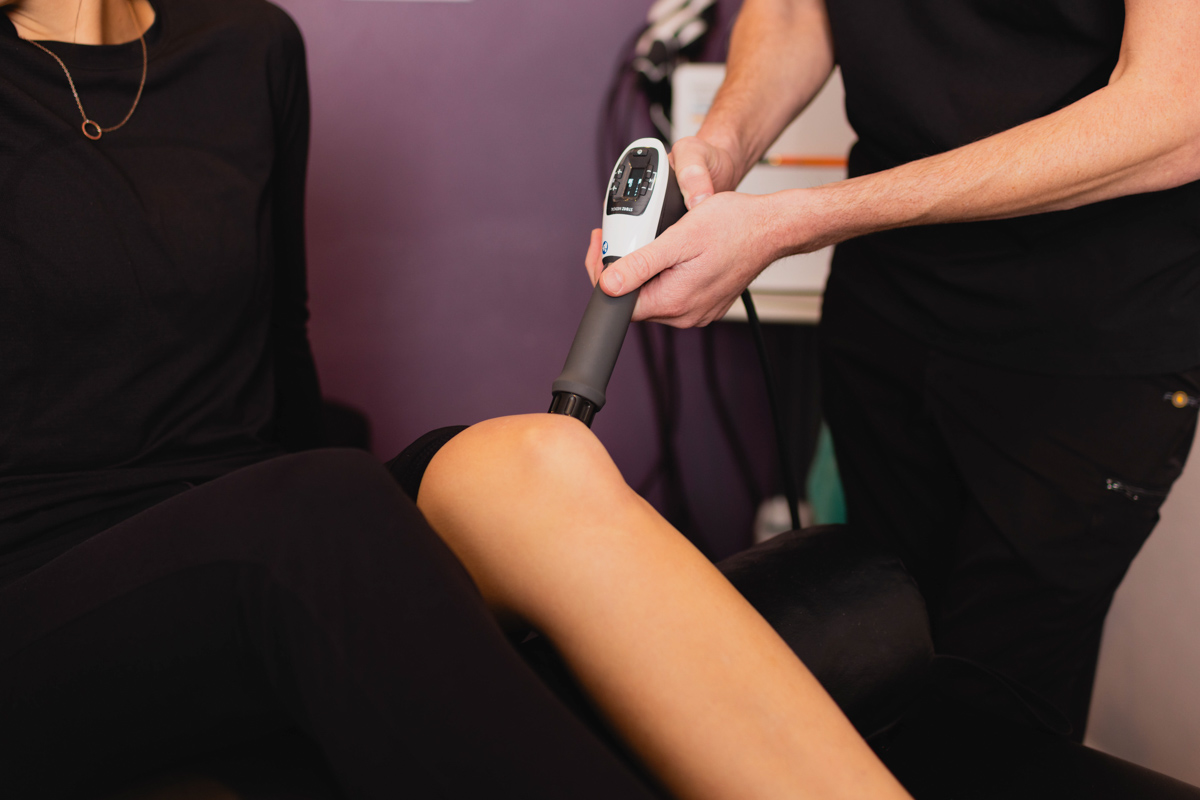
A session is quick and straightforward. Your provider applies a handheld device to the injured area, and it delivers rapid acoustic pulses into the tissue. You will feel a strong tapping sensation, which is normal and adjustable.
Most sessions take only a few minutes of actual treatment. There is no numbing, no needles, and no downtime, so you head right back into your day when it is done.
When Shockwave Is the Right Call
Shockwave shines for injuries that have stopped improving on their own. If you have been babying a tendon or a sore heel for months with little progress, you are the kind of case it was built for. It is less about fresh injuries and more about the stubborn ones that have plateaued.
When you book an appointment, we start with an evaluation and are honest about whether shockwave is the right tool for your specific injury or whether another approach makes more sense. We would rather point you to what works than sell you a session you do not need.
How Shockwave Fits With the Rest of Your Care
Chronic injuries rarely have a single cause, so shockwave usually works best as one piece of a plan. We may combine it with hands-on chiropractic care and targeted therapy so the whole area, not just the sore spot, is supported. Having every tool in one clinic means we can adjust your care as you improve without sending you elsewhere.
Insurance and Pricing
Shockwave is not covered by insurance, so we offer it as a cash-pay treatment and keep the pricing transparent. Because it works best over a short series of sessions, we offer multi-visit discounts, and our front desk will walk you through the options before you begin. There is no pressure to commit beyond what you need.
The Idea Behind It, in Plain Terms
Your body is good at healing fresh injuries, but a chronic one can get stuck in a kind of holding pattern where the repair process stalls out. Shockwave therapy works by nudging that process back into motion.
The acoustic pulses create a controlled bit of stress in the tissue, which prompts your body to send more blood flow and repair activity to the area. In simple terms, it reminds a stalled injury that it still has healing to do. That is why it tends to help most with the nagging problems that rest alone has not fixed.
Who Tends to Benefit Most
We see the best fit in active people whose bodies take a beating and do not fully bounce back. Runners with heel pain, weekend athletes with a cranky tendon, and folks on their feet all day are common candidates. If you have tried rest, ice, and stretching without lasting progress, shockwave is often the next logical step. We will confirm the fit during your evaluation.
What to Expect After a Session
Because shockwave works by stimulating your body’s own repair response, the real progress happens in the days between sessions, not just during them. Some people feel a little sore in the treated area for a day, similar to post-workout soreness, and then notice steady improvement as the series continues.
We will check in on how the area is responding at each visit and adjust the plan as needed. Healing a stubborn injury is a process, and we would rather track your progress honestly than promise an overnight change.
Frequently Asked Questions
It is a non-invasive treatment that uses focused sound waves to stimulate healing in injured tissue. It is most often used for chronic tendon and soft-tissue problems that have not responded to rest.
You may feel a strong tapping or mild discomfort during the pulses, but it is brief and tolerable for most people. Your provider can adjust the intensity to keep it comfortable.
Most people need a short series spaced out over a few weeks. The exact number depends on the injury and how your body responds, which we will discuss after evaluating you.
No. You can return to your normal activities right after a session. Your provider may suggest easing off heavy strain on the treated area for a day or two.
Both are non-invasive, but they work differently. Shockwave uses acoustic pulses to jump-start healing in stalled tissue, while laser therapy uses light energy to reduce inflammation and support recovery. We can help you choose the best fit during your visit.
For many people, once the underlying tissue heals, the relief holds well, especially if you keep up the activity and movement habits we recommend. Because every injury is different, we will talk through what realistic results look like for your specific case rather than making a blanket promise.
Restart Your Recovery
The sooner you address a stalled injury, the fewer compensations your body builds around it, so there is real value in starting before it becomes a habit your whole body works around.
Book a shockwave session and give that stubborn injury a reason to finally heal.