


Short answer: Yes, for many people chiropractic care eases sciatica by relieving the pressure on the irritated nerve. The right approach depends on what’s causing it, which is why a quick exam comes before anything else.
Sciatica is that unmistakable pain that starts in your lower back or buttock and shoots down the back of your leg. It can be a dull ache or a jolt that stops you mid-step. Some people also feel tingling, numbness, or a heavy, weak feeling in the leg or foot. If chiropractic keeps coming up in your searches, here’s an honest look at what it can and can’t do, and how to tell whether it’s a fit for your case.
Why does chiropractic care help sciatica?
Sciatica isn’t a disease of its own. It’s a symptom of something pressing on or irritating the sciatic nerve, usually a herniated disc, a bone spur, or a tight muscle squeezing the nerve. Ease that pressure and the pain usually follows.
That’s the whole idea behind chiropractic care for sciatica. Rather than masking the pain, the goal is to address the mechanical cause. When the joint moves better and the nerve has more room, the signal it’s been screaming stops screaming.
It also explains why the same leg pain responds to different treatments in different people. If a disc is bulging into the nerve, the fix looks different than if a deep buttock muscle is clamping down on it. A chiropractor’s job is to sort out which mechanical problem you have, then match the tool to it. That’s the difference between care that’s aimed and care that’s guessed.
Does chiropractic actually work for sciatica?
For the common, mechanical kind of sciatica, hands-on care helps a lot of people avoid stronger measures. Many patients get meaningful relief from a mix of adjustments, soft-tissue work, and, when a disc is involved, decompression. It isn’t a magic switch, and honesty matters here: results depend on the cause, your overall health, and how long the nerve has been irritated.
What chiropractic care is genuinely good at is the mechanical piece. It restores motion, calms the muscles around the nerve, and takes load off an angry disc. What it can’t do is undo every structural problem. A small share of sciatica comes from issues that need imaging, medication, or a surgeon, and no amount of adjusting changes that. A good clinician is upfront about which camp you’re likely in once the exam is done.
It’s also worth saying that chiropractic care doesn’t have to be an all-or-nothing choice. For many people it’s the conservative first step that makes stronger interventions unnecessary, and it works comfortably alongside the exercise, activity changes, and medical care your other providers may recommend. The point isn’t to talk you out of every other option. It’s to give the nerve room to settle using the least invasive tools that fit your case, and to be clear-eyed with you if those tools aren’t enough.
What treatments does a chiropractor use for sciatica?
There’s no single fix, and the right tool depends on the cause. A few of the common ones:
- Chiropractic adjustments. Gentle, targeted movement of the spine to restore motion and reduce nerve irritation. When a joint is stuck, the muscles around it tense up and the nerve gets less room, so freeing the joint often quiets the whole area. Learn more about hands-on chiropractic care.
- Non-surgical spinal decompression. When a disc is the culprit, decompression on the DRX-9000 gently stretches the spine to create space and draw the disc back off the nerve. It’s a drug-free, non-surgical option, and not every disc needs it, which is why candidacy comes first.
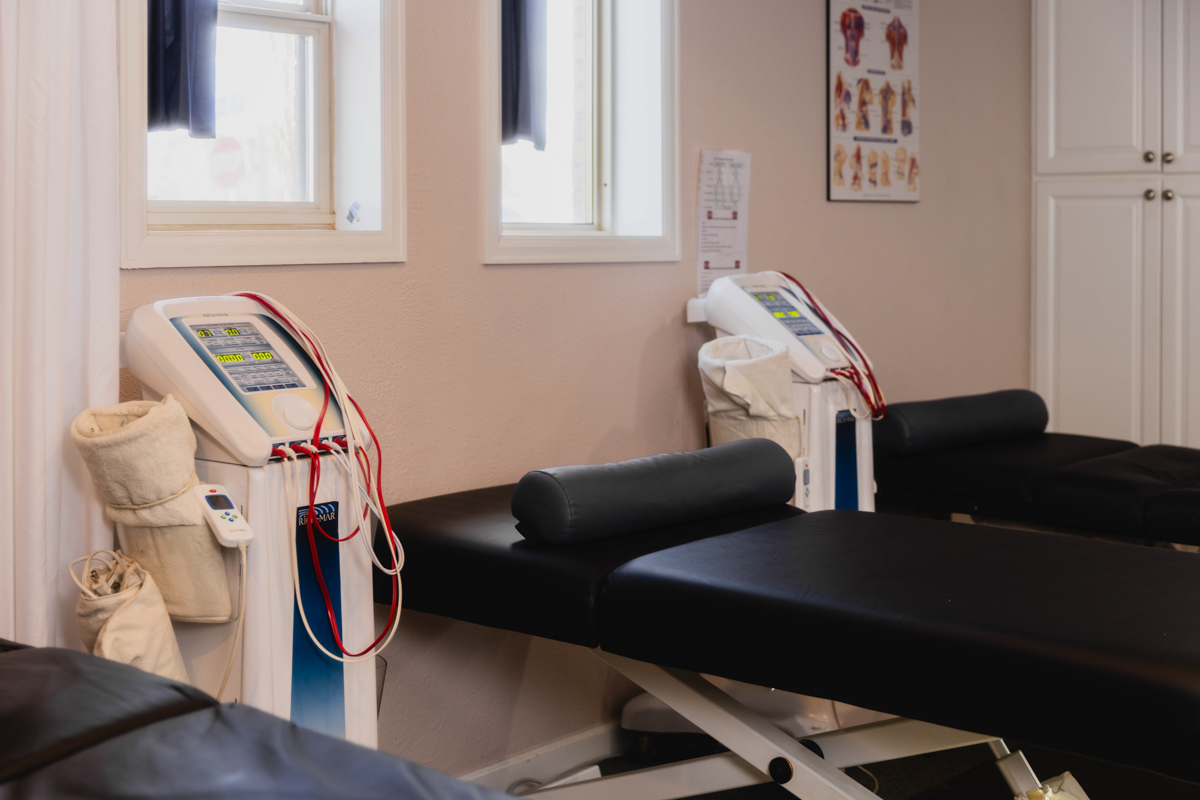
- Soft-tissue and trigger-point work. To calm the muscles that can pinch the sciatic nerve, especially the piriformis deep in the buttock. Releasing that tension can take a surprising amount of pressure off the nerve on its own.
- Movement and posture guidance. Simple changes to how you sit, lift, and move so the flare doesn’t keep coming back. This is the part that protects the gains once the pain settles.
Often it’s a combination. An adjustment might free up a stiff joint while soft-tissue work releases the muscle that’s been guarding around it, and decompression handles the disc underneath. The mix is built around your exam, not a template, and it changes as you improve. If one approach isn’t moving the needle, the plan shifts rather than repeating itself.
What happens at your first visit?
Before anyone touches your spine, a chiropractor should figure out what’s actually driving the pain. That usually means a few questions about how it started, some simple movement tests, and checks for reflexes, strength, and sensation down the leg. It’s quick, and it’s the part that keeps care safe and pointed in the right direction.
From there you get a straight answer: whether this looks like a disc, a muscle, or something else, and which of the tools above fits. If imaging or a referral makes more sense first, a good clinician will tell you that too, instead of starting treatment blind. You should leave the first visit understanding what’s wrong and what the plan is, not just booked for a string of appointments.
Bring anything that helps tell the story. When the pain started, what makes it worse, any past back trouble, and a short list of what you’ve already tried all help. The clearer the picture, the faster care gets aimed at the real problem instead of a general one.
How long does it take chiropractic care to relieve sciatica?
Some people feel a real difference within a handful of visits. Others, especially when the sciatica has been building for months, take longer. The timeline tracks with the cause and how long the nerve has been irritated, not with a fixed number of sessions.
You’ll notice a theme here: we don’t set you up for a rigid, months-long program before we even know what’s wrong. We find out what’s driving your pain, tell you what to expect, and adjust as you improve. If you’re not responding the way we’d hope after a fair trial, that’s a signal to reassess or refer, not to keep booking more of the same.
Care usually tapers as you get better. Early on, visits might sit closer together to settle the flare, then spread out as your motion returns and the nerve calms down. The goal is to get you back to normal and out the door, not to keep you coming in for its own sake.
When is chiropractic not the answer?
Being honest about the limits is part of doing this well. Chiropractic care is a strong first option for mechanical sciatica, but some situations call for a different path first. A careful clinician screens for these at the exam and refers out when the picture calls for it.
- Fast-progressing weakness or spreading numbness in the leg. These deserve prompt medical evaluation rather than watchful waiting.
- Loss of bladder or bowel control. This is a rare emergency and needs immediate care, not a chiropractic visit.
- Signs pointing beyond the mechanical, such as fever, unexplained weight loss, or a history that raises other concerns. These get worked up medically first.
Referring you to the right provider when that’s what you need isn’t a failure of chiropractic care. It’s what a trustworthy clinic does, and it’s how you avoid wasting weeks on the wrong track.
Is a chiropractic adjustment safe if I have sciatica?
For most people, yes, provided it follows a proper exam. The exam matters because a small number of sciatica cases point to something that needs a different path, and a careful clinician screens for that first. If an adjustment isn’t the right call, the answer is to change the approach, not to push through.
Get seen promptly rather than waiting if your leg is getting weak, if numbness is spreading, or if the pain is severe. And seek emergency care right away if you ever lose bladder or bowel control, which is a rare red flag that goes beyond routine sciatica.
Technique can also be dialed to your comfort and your case. When a disc is very irritable, gentle, low-force methods and decompression often come before any firmer adjustment. The plan should fit how your body is responding that day, not a fixed script.
What Applewood won’t do
Plenty of clinics hand sciatica patients a long, prepaid treatment plan before they’ve even sorted out the cause. That’s not how we work. We don’t sell packages, and we don’t lock you into months of visits to find out whether care is helping.
Applewood is a walk-in clinic in Wheat Ridge, so you can be seen the same day instead of booking out a week. Done waiting for the pain to pass on its own? We’ll figure out what’s driving your sciatica and start on the right approach for your case, then adjust as you go. If a different provider is the better fit, we’ll tell you that plainly.
Getting sciatica checked in Wheat Ridge
The most useful thing you can do with sciatica is stop guessing about the cause. An in-person evaluation sorts out whether it’s a disc, a muscle, or something else, and points you to the treatment that actually fits. Guessing tends to cost you weeks; a real exam saves them.
Applewood has cared for Wheat Ridge, Golden, and Lakewood for more than 60 years, and both adjustment and decompression are available under one roof, so you’re not bounced between clinics to get started. That’s a long time treating leg pain in this community, and it means you’re seen by people who have sorted out a lot of sciatica. If your leg pain matches what you’ve read here, come get it looked at.
Explore sciatica care at Applewood →
This article is general education, not medical advice. Sciatica has several possible causes, and only an in-person exam can confirm yours. Applewood Chiropractic accepts most major insurance and MedPay; Medicare is not accepted.
Don't Wait Out the Pain. Book an Appointment Today!
An article can point you in the right direction, but it can’t examine you. That takes a real visit. Our Wheat Ridge clinic takes walk-ins the same day, so you don’t wait weeks for an opening. Come in when it works for you, no referral needed, and we’ll figure out what’s actually going on.
Like this article? Spread the word!
Related Posts

Back From the Mountains and Aching? How Chiropractic Care Can Help You Recover
Back from the mountains and sore? See how chiropractic care in Wheat Ridge eases…

Should You See a Chiropractor After a Car Accident?
Learn about common auto accident injuries and personalized chiropractic care at Applewood…

Herniated Disc Symptoms: The Warning Signs Worth Paying Attention To
Know the warning signs of a herniated disc: back or neck pain, numbness, tingling, and…